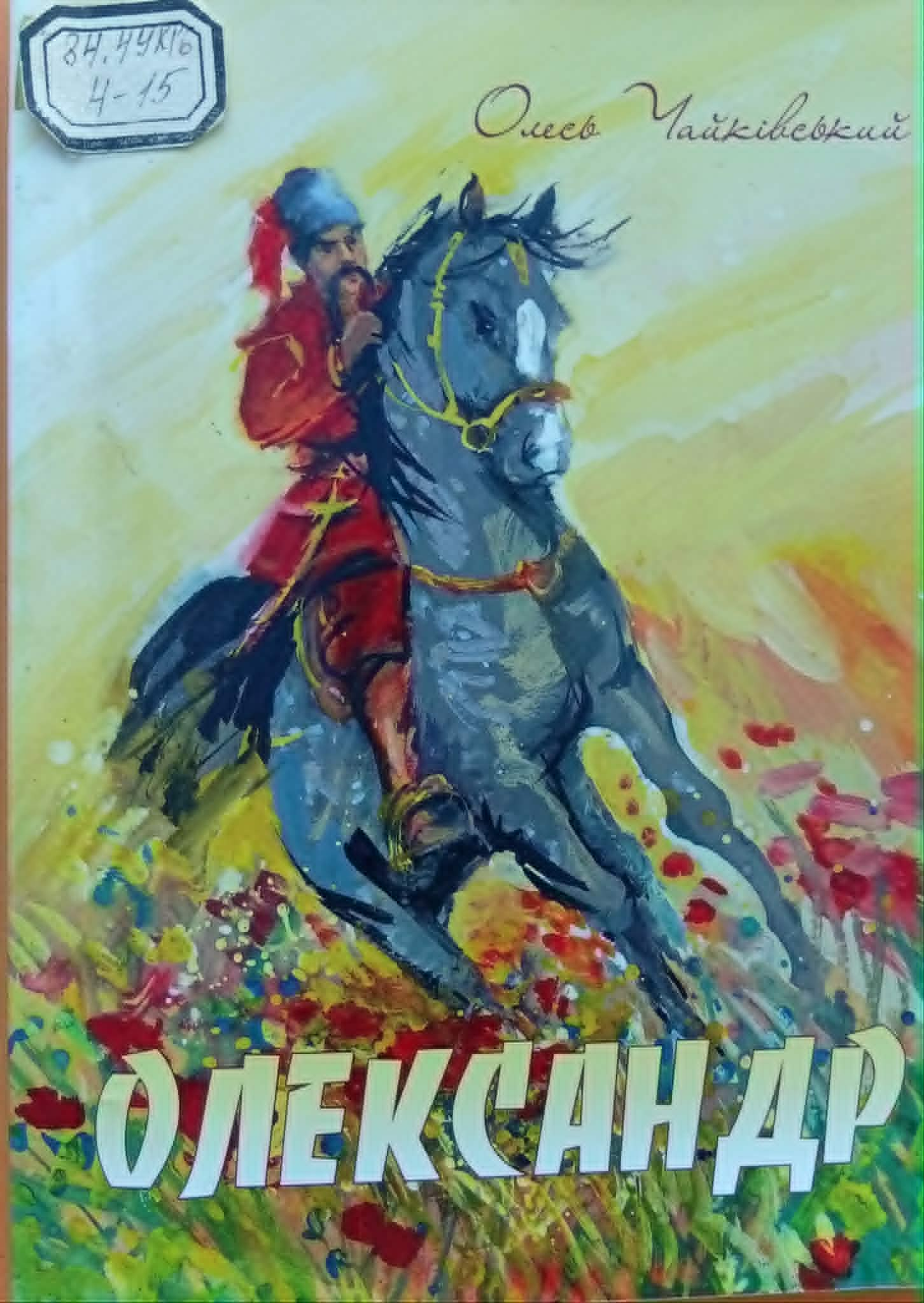
“People struggled as if against ice, bending under hardship. Rumors spread about distant Novorossiya, about the vast Black Sea steppes. Many set out for those lands… yet no one truly knew what awaited them there.”
And so they chose to send a man — someone experienced, someone who understood hardship. His name was Oleksandr.
He packed his small travel bag and set out toward the unknown. Days passed, then weeks. Back home, people waited, hope slowly fading. But at last, he returned — bringing with him stories of endless steppes, where a horse could gallop for days without reaching the horizon, where the feather grass whispered in the wind, and where the land, if cared for, could sustain life.
Not long after, Oleksandr set out again — this time with his fellow villagers. The journey was harsh. Many never reached their destination. But those who endured came at last to the quiet banks of the Inhulets River.
There, Oleksandr fell gravely ill.
“Good people… I may not survive this journey. But I have served you with honesty and faith. Now… farewell,” he said — and passed away.
They buried him beside the river. And there, in that very place, they stayed.
The first stake was driven into the ground. Dugouts were built. And the settlement was named Oleksandrivka — in memory of the man who had led them there.
This is one of the many legends about the founding of Velyka Oleksandrivka — a place whose history spans more than two centuries.
📖 Echoes of History
There is another story — no less compelling.
In the aftermath of the Russian–Turkish wars of the 17th and 18th centuries, the vast southern steppes became part of the Russian Empire. These lands, almost untouched by settlement, were called Novorossiya — a new frontier.
People began to arrive. They came from Chernihiv, Poltava, Kyiv — from Belarus, from Lithuania. Cossacks, families, dreamers. Before settling, they sent scouts ahead — to search for land where life could take root.
One of them — Oleksandrovskyi — chose this place.
He returned with others. But fate was brief — he died the same year. A single cross marked the first grave in the new land.
And in his name, the settlement was called Oleksandrivka.
Every land carries its legends. Every place remembers its pioneers. Here, people still honor those who once walked into the unknown — and never returned.
The names Velyka and Mala Oleksandrivka still echo that memory — of courage, sacrifice, and the quiet beginning of a new life.
🌿 A Land Takes Root
Where there is water, there is life.
In 1784, the first homes appeared along the winding Inhulets River. At first, just one street — then another. Life slowly unfolded.
In 1808, new settlers arrived and built their homes further downstream. Thus was born Mala Oleksandrivka — a sister settlement.
As people discovered underground springs and dug wells, the village expanded upward along the gentle slopes of the river valley.
Homes were built from local limestone, taken from nearby ravines. Roofs were covered with straw. Simple, but enduring.
🏛️ A Life of Culture
The village grew — not only in size, but in spirit.
From around 3,000 inhabitants in 1816, the population grew to more than 6,000 by 1909.
With life came a hunger for knowledge. There were no formal cultural institutions, but people created their own:
- a village choir
- a drama circle
- theatrical performances
Plays were staged in private homes, lit by the soft glow of kerosene lamps and candles.
The first library appeared in 1898 — modest, but meaningful. For many, it was not about reading alone, but about listening — gathering together to hear stories spoken aloud.
⚠️ Changing Times
But history does not stand still.
There came a time when “new masters of the land” arrived — and with them came destruction. Not only buildings and institutions were lost, but traditions, ways of life, and the continuity of generations.