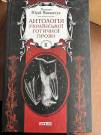
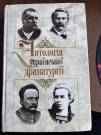
ENG: Anthology of Ukrainian Gothic Prose, Vol. 2
While the first volume was devoted to “farmstead” and Cossack mysticism, the second volume of the *Anthology of Ukrainian Gothic Prose* marks a transition to the modern Gothic of the late 19th and early 20th centuries. Here, horror ceases to be merely external (devils, witches) and shifts into the depths of the human psyche.
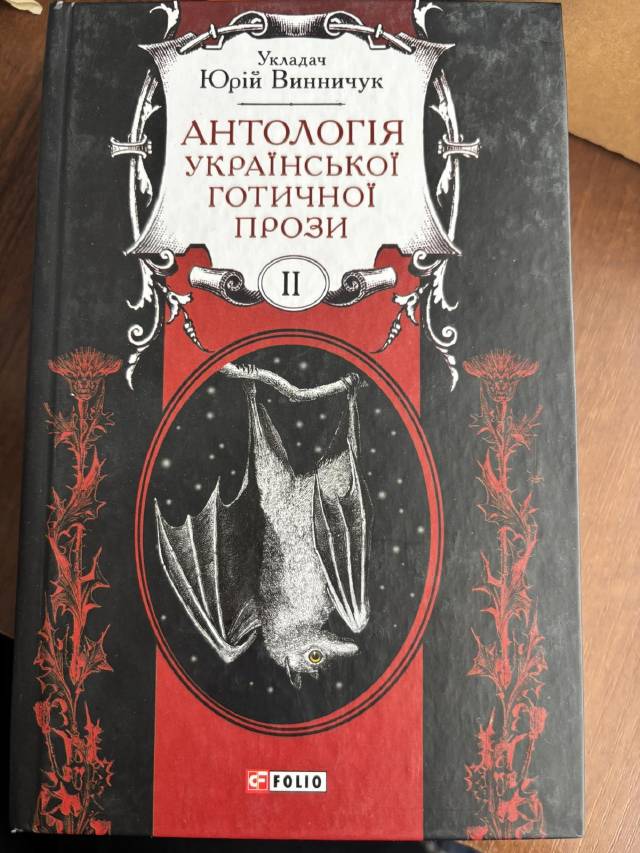
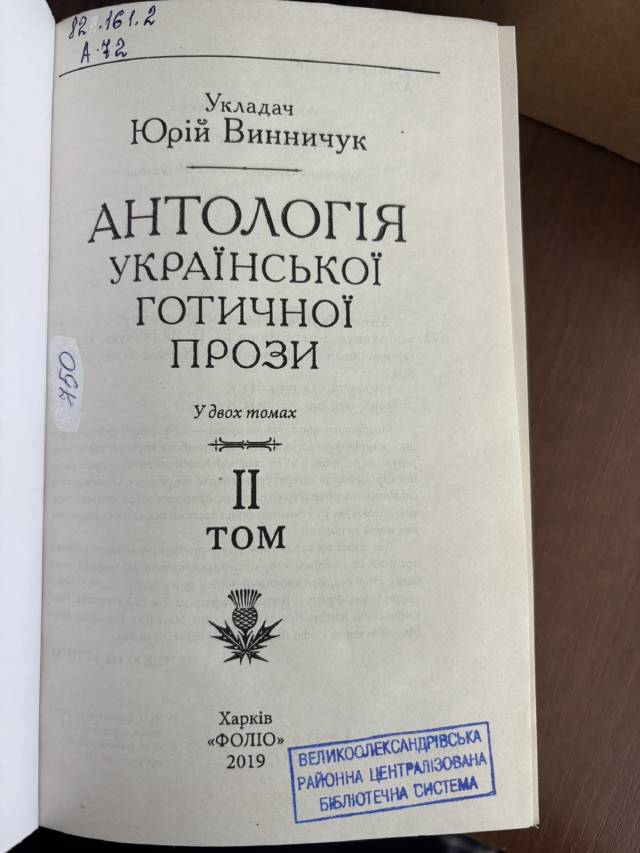
The second volume of *Anthology of Ukrainian Gothic Prose* marks a transition from folk demonology to intellectual horror and psychological thrillers. While the first volume relied on external elements (red shawls and witches) to instill fear, the second plunges readers into the darkness of the human mind.
Here are the main themes explored in this volume:
1. From “scary stories” to the psychological abyssAt the turn of the 19th and 20th centuries, Ukrainian literature was undergoing a period of modernism. This was reflected in Gothic literature as well. The main source of horror is no longer the devil in the forest, but a person’s inner demons:
Madness: Characters often lose touch with reality, unable to distinguish where dreams end and reality begins.
Doubles: A popular theme of the time, where a character encounters their own self or senses the presence of a “stranger” within their soul.
Existential fear: A premonition of death, the inevitability of fate, and the meaninglessness of existence. 2. Gothic Literature by the Great ClassicsThis volume shatters the schoolroom stereotype that our classics wrote only about the harsh fate of peasants. Editor Yuriy Vynnychuk has compiled works in which they emerge as masters of the mystical:
Ivan Franko: His Gothic writing often carries social or philosophical undertones, where evil is not merely a myth but the destructive force of human passions.
Mykhailo Kotsyubynsky: A master of impressionistic horror. His descriptions of nature or human states are so dense and unsettling that they create the effect of being fully present in a nightmare.
Olha Kobylianska: Brings the “mountainous” flavor of Bukovina to Gothic literature. Her works are saturated with magic, love spells, and the fateful power of women over men (and vice versa).
Agatangel Krymsky: Adds elements of Orientalism (Eastern mysticism), which was very popular during the Decadent era.
3. Change of Scenery: The City and the InteriorIn the second volume, Gothic “enters” the interior. Now it is not just the wild steppe, but also:
Cramped city apartments: Where strange sounds can be heard behind the walls, and mirrors reflect what should not be there.
Hospitals and psychiatric institutions: A symbol of human helplessness in the face of science and one’s own mind.
Cemeteries and crypts: But no longer as a setting for folk tales, but as a space for melancholic reflections on decline and death. 4. The Philosophy of the “Fin de Siècle”The second volume is steeped in the spirit of decadence. It is literature of weariness, refinement, and anxiety. Authors experiment with states of semi-consciousness, hallucinations, and spiritualism. It was the intelligentsia’s reaction to the rapid changes in the world—the feeling that the old order was crumbling, and that something unknown and frightening lay ahead.
| Общие характеристики | |
|---|---|
| Author | Yurii Vynnychuk |
The Library Is Close to You
Choose books online, visit the library in person, or order home delivery — we’ve made sure that every book can easily and conveniently find its reader.
Recently viewed products










Ukrainian Literature
- Anthology Ukrainian
- Collective Authors (MUR)
- Collective Authors
- Agata Pila
- Oleksii Kotrús
- Oleksiy Savchenko
- Oleksandr Mikhed
- Oleksii Volkov
- Oleksandr Havrosh
- Oleksandr Dovzhenko
- Oleksandr Balabko
- Oleksandr Irvanets
- Ali Hazelwood
- Alla Rohashko
- Anastasiia Nikulina
- Anatolii Dnistrovyi
- Anatoliy Dimarov
- Anastasiia Vinnyk
- Andriy Kokotiukha
- Андрій Процойло
- Andrii Rohashko
- Andrii Protsailo
- Andrii Semiankiv
- Andriy Liubka
- Andriy Kurkov
- Andrii Mukharskyi
- Andrii Bondar
- Andrii Horbunov
- Andrii Zelinskyi
- Andriy Vynokurov
- Andriy Demskyi
- Andriy Tiutiunnyk
- Andriy Sanchenko
- Andriy Khoma
- Andriy Tsapliienko
- Andriy Chaikovskyi
- Hanna Litsur-Shchadei
- Hanna Dankanych
- Hanna Lenok
- Anna Bilenka
- Antin Mukharsky
- Anton Sanchenko
- Anton Pospelov
- Artem Chapai
- Artem Chekh
- Artur Dron
- Baba Yuliia
- Bohdan-Ihor Antonych
- Bohdan Zholdak
- Borys Pechnenko
- Borys Antonenko-Davydovych
- Borys Hrinchenko
- Borys Oliinyk
- Borys Finkelshtein
- Bruno Hoshko
- Valerian Pidmohylny
- Valerii Ananiev
- Valentyn Berdt
- Valerian Pidmohylnyi
- Valentyn Chemerys
- Vasyl Makhno
- Vasyl Stus
- Vasyl Prostopchuk
- Vasyl Portyak
- Vasyl Slapchuk
- Vasyl Barka
- Vasyl Trakalo
- Vasyl Teren
- Vasyl Terenko
- Vasyl Cherepkov
- Vasyl Shkliar
- Vasylii Baziuk
- Vasyl Husti
- Vera Svobodina
- Vira Melnykova
- Vira Aheieva
- Viktor Vald
- Viktoriia Subotina
- Viktoriia Amelina
- Viktoriia Hranetska
- Viktor Domontovych
- Vitalii Boryspolets
- Volodymyr Yermolenko
- Volodymyr Malyk
- Volodymyr Medvid
- Volodymyr Kilchenskyi
- Volodymyr Petsnov
- Volodymyr Yeshkiliev
- Volodymyr Rafeyenko
- Volodymyr Savchenko
- Volodymyr Samoilenko
- Volodymyr Lys
- Volodymyr Areniev
- Volodymyr Vynnychenko
- Volodymyr Drozd
- Volodymyr Dibrova
- Volodymyr Chepovyi
- Vladislav Bakhrevsky
- Volodymyr Bazylevskyi
- Viacheslav Tybel
- Halyna Tsykina
- Halyna Pahutiak
- Halyna Vdovychenko
- Halyna Mate
- Halyna Babych
- Halyna Tarasiuk
- Hanna Horodetska
- Heorhii Visnyk
- Hnat Khotkevych
- Horikha Zernia
- Hryhoriy Kvitka-Osnovianenko
- Hryhorii Tiutiunnyk
- Darina Hnatko
- Dara Hnatko
- Dara Korniy
- Gianfranco Calligarich
- John Boyne
- Dmytro Pavlychko
- Dmytro Korchynskyi
- Dmytro Bura
- Dmytro Bilyi
- Dmytro Bezverkhnii
- Dmytro Biriukovych
- Dokiia Humenna
- Don Miguel Ruiz
- Dorzh Batu
- Yevhen Pluzhnyk
- Євген Кузнецов
- Yevhen Plozhii
- Yevhen Malaniuk
- Yevhen Hutsalo
- Yevhen Hrebinka
- Yevheniia Kononenko
- Kateryna Motrych
- Kateryna Smyrnova
- Kateryna Tsyhanchuk
- Olena Pechorna
- Olena Rusina
- Olena Volynska
- Olena Zhovna
- Olena Salipa
- Olena Morentsova-Shulyk
- Zhanna Kuiava
- Zirka Menzatiuk
- Zoriana Leshko
- Zoia Kazanzhy
- Ivan Bahrianyi
- Ivan Nechui-Levytskyi
- Ivan Andrusiak
- Ivan Bilyk
- Ivan Kotliarevskyi
- Ivan Mykytenko
- Ivan Baidak
- Ivan Velychkovskyi
- Ivan Franko
- Ivan Tsyperdyuk
- Ivan Bilyi
- Ivan Kostyria
- Ihor Pavliuk
- Ihor Palynskyi
- Ihor Moiseienko
- Illarion Pavliuk
- Iren Rozdobudko
- Ірена Карпа
- Iryna Perenesiienko
- Iryna Hanika
- Iryna Rozdobudko
- Iryna Savka
- Irysia Lykovych
- Iryna Ahapeieva
- Iryna Vilde
- Iryna Hovorukha
- Iryna Herasymenko
- Iryna Feofanova
- Iryna Tsilyk
- Iryna Vlasenko
- Karina Savaryna
- Kateryna Babkina
- Kateryna Hrynivicheva
- Katia Blostka
- Kyrylo Smyrnov
- Kostiantyn Moskalets
- Kostiantyn Kohtianh
- Larisa Denysenko
- Levko Volovets
- Leonid Petrovskyi
- Leonid Kadenyuk
- Leonid Mosendz
- Leonid Smylianskyi
- Leonid Ushkalov
- Leonid Kononovych
- Lesia Holota
- Lesia Ukrainka
- Lina Kostenko
- Liubov Holota
- Liubov Viduta
- Liubko Deresh
- Liubov Hontaruk
- Liudmyla Taran
- Liudmyla Volok
- Liudmyla Voronyna
- Lyuko Dashvar
- Luke Allnutt
- Maksym Bespalov
- Maksym Butchenko
- Mariana Savka
- Markiian Prokhasko
- Marina and Serhiy Dyachenko
- Mariia Brovchenko
- Mariia Matios
- Maryna Hrymych
- Marko Vovchok
- Maria Savka
- Mariia Oleksa
- Maryna Manchenko
- Marta Hulei
- Mariia Dziuba
- Mariia Tkachivska
- Mariia Chumarna
- Maryna Sokolian
- Marusia Volvachivna
- Milena Ivantsova
- Myroslav Dochynets
- Mykhailo Starytskyi
- Mykhailo Stelmakh
- Mykhailo Brynykh
- Nadiia Bila
- Nadiika Herbish
- Nadia Bila
- Nadiia Talan
- Nalada Kvitka
- Nataliia Hurnytska
- Nataliia Topovych
- Nataliia Fialko
- Nataliia Yasinovska
- Natalia Voskresenska
- Natalka Sniadanko
- Nata Ihnatova
- Nataliia Matolinets
- Nataliia Humeniuk
- Natalka Herbish
- Nataliia Kostina
- Nataliia Topska
- Nataliia Chaikovska
- Nataliia Cherchenko
- Nataliia Panchuk
- Natasha Vlashchenko
- Natalka Shevchenko
- Mykola Nehoda
- Mykola Voronyi
- Mykola Vinhranovskyi
- Mykola Khvylovyi
- Mykola Riabchuk
- Mykola Rudenko
- Mykola Hohol
- Mykola Kulish
- Mykola Brynych
- Mykola Holovatyi
- Mykola Kryvenko
- Mykola Surzhenko
- Mykola Bazhan
- Nina Fialko
- Nina Kuriata
- Nina Vadchenko
- Oksana Pechorna
- Oksana Kirian
- Oksana Karavanska
- Oksana Saiko
- Oksana Zabuzhko
- Oksana Lemishka
- Okseniia Burlaka
- Oles Ilchenko
- Oleksandr Mykhailuta
- Oleksandr Boichenko
- Oles Berdnyk
- Oles Honchar
- Oleksa Bilobrov
- Oleh Sentsov
- Oles Ulianenko
- Oles Chupa
- Olha Bohomaz
- Olha Dubchak
- Olha Babii
- Osyp Nazaruk
- Osyp Makovei
- Ostap Vyshnia
- Pavlo Belianskyi
- Pavlo Hirnyk
- Pavlo Usenko
- Pavlo Volvach
- Panas Myrnyi
- Petro Korobchuk
- Platon Voronko
- Polina Kulakova
- Roman Ivanychuk
- Roman Horak
- Roman Bereza
- Rostyslav Fedoriv
- Svetlana Ponomarenko
- Svitlana Pyrkalo
- Svitlana Taratorina
- Svitlana Oslavska
- Svitlana Povaliaieva
- Svitlana Talan
- Svitlana Bohdan
- Serhii Ponomarenko
- Serhii Osoka
- Serhii Lushchyk
- Serhii Bortnikov
- Serhii Butenko
- Serhii Hrabar
- Serhiy Hrydin
- Serhiy Zhadan
- Serhii But
- Sofiya Povalyaeva
- Sofiia Maidanska
- Sofiia Andrukhovych
- Sofiia Benza
- Stepan Oksenyk
- Stepan Rudanskyi
- Stepan Protsiuk
- Stepan Vasylchenko
- Stepan Hrytsiuk
- S.S. (sasgol)
- Tamara Pakhomova
- Tamara Horikha Zernia
- Tamara Tsoi
- Tania Maliarchuk
- Taras Prokhasko
- Taras Havryliv
- Taras Antypovych
- Taras Teren
- Tetiana Vlialko
- Tetiana Belimova
- Tetiana Baida
- Tetiana Sulyma
- Tetiana Bondarchuk
- Tymofiy Havryliv
- Tina Perron
- Todos Osmachka
- Uliana Pylypiuk
- Feodosii Rohovyi
- Fozzy
- Eleonora Belska
- Elizabeth Gilbert
- Yuliiana Matanovych
- Yuliia Vainonen
- Yuliia Kisina
- Yulian Opilskyi
- Yurii Mushketyk
- Yurii Vynnychuk
- Yurii Izdryk
- Yuriy Pokalchuk
- Yurii Makarov
- Yurii Andrukhovych
- Yurii Bedzyk
- Yurii Datsenko
- Yurii Hudz
- Yuriy Tarnawsky
- Yurii Khorunzhyi
- Yurii Bespalov
- Yurko Vovk
- Yakiv Valetov
- Yana Sokolova
- Yana Blazhivska
- Yaroslav Polishchuk
- Yaroslav Dehtiarenko
- Yaroslava Melnyk
- Yaroslava Bakalets